Project: Mapping Carbon Miles
One of the fondest memories from my childhood is the trips my mother and I made to the local high street (Palmerston Road, Southsea) on an almost daily basis. To the local Clark’s for shoes, WH Smith’s for school stationery, Debenham’s for the odd fry-ups, and of course, Woolworth’s for the Pick ‘n Mix treats. Today, like most high streets across the country, Palmerston Road’s composition is largely made of charity shops and coffee bars. The ghost of Palmerston Road of its glorious bygone days lurks in a few sad-looking and dilapidated shops – Iceland, Boots, and WH Smith struggling to compete with the powerful machinations of the modern business world.
Our way of life has changed drastically over the last two decades. It is all down to economics and mass adoption of technology. People no longer go to cinemas, opting instead for Netflix and other online entertainment which works out much cheaper and more convenient (£20 per month subscription for the whole family to enjoy on-demand movies, rather that £80 per trip for a family of four to go to the cinema). Cost-of-living challenges also mean that shoppers these days buy things from the large chains in out-of-town shopping enclaves and online. It is no surprise then that high street shops struggle to stay in business. Children born today may never experience going into a local bakery to buy a loaf of freshly baked bread, or sit in the plush seat of a cinema, or skip down a bustling high street full of life.
Apart from the demise of a beautiful heritage, the dark side of this transition is the environmental cost. This is something that we don’t often think about: we buy things that come from halfway across the world, because they are cheaper. The supermarket chain Morrison’s has said that lamb chops from New Zealand is cheaper to source, and therefore cheaper to sell in the UK, than British lamb. It may be lighter on the pocket, but costly in terms of carbon miles.
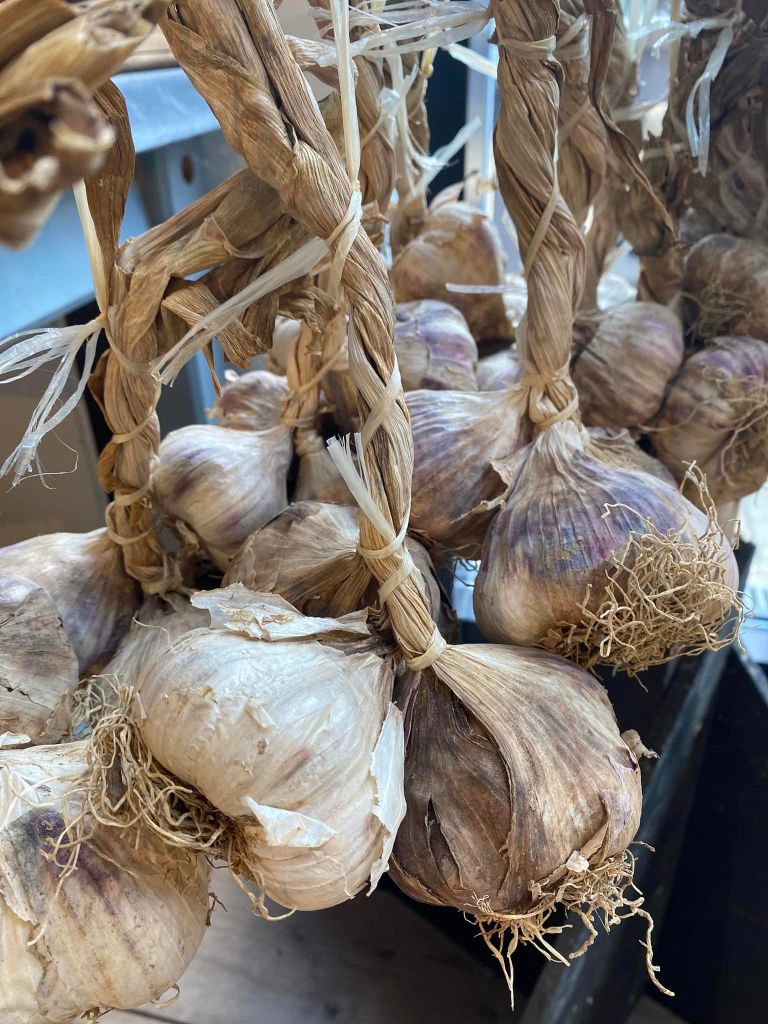
Therefore, when I was in the farm shop in Stansted Park Farm Shop this weekend, I was encouraged to see the shop stocking products and displaying signs to show how far the products came from.
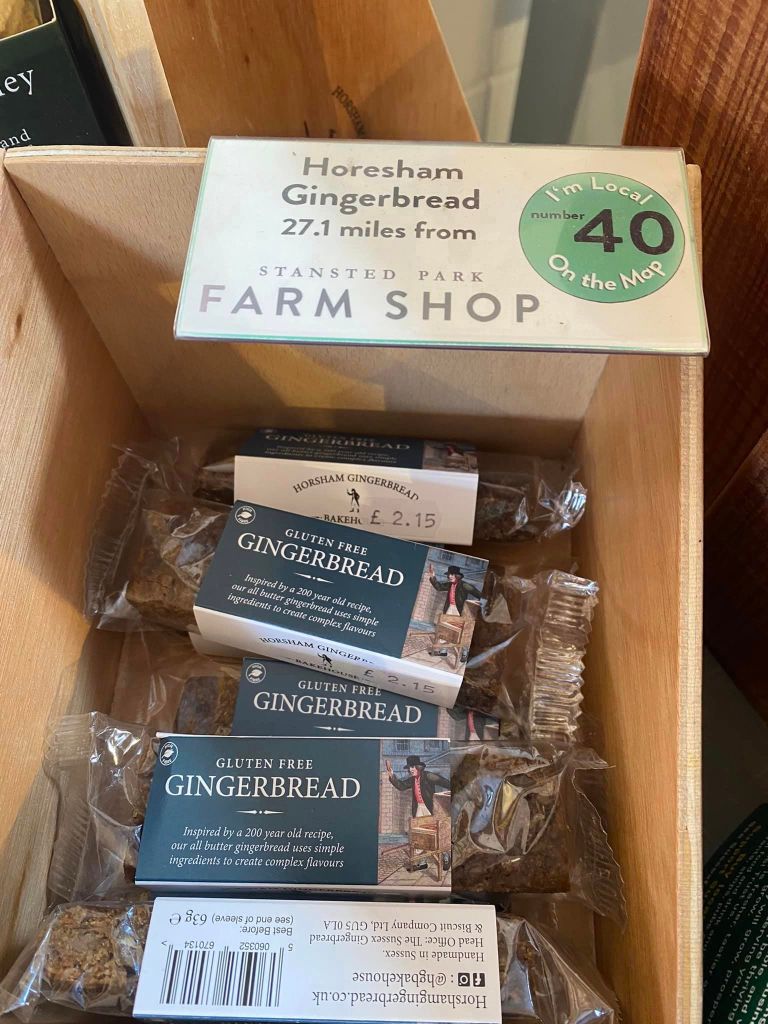
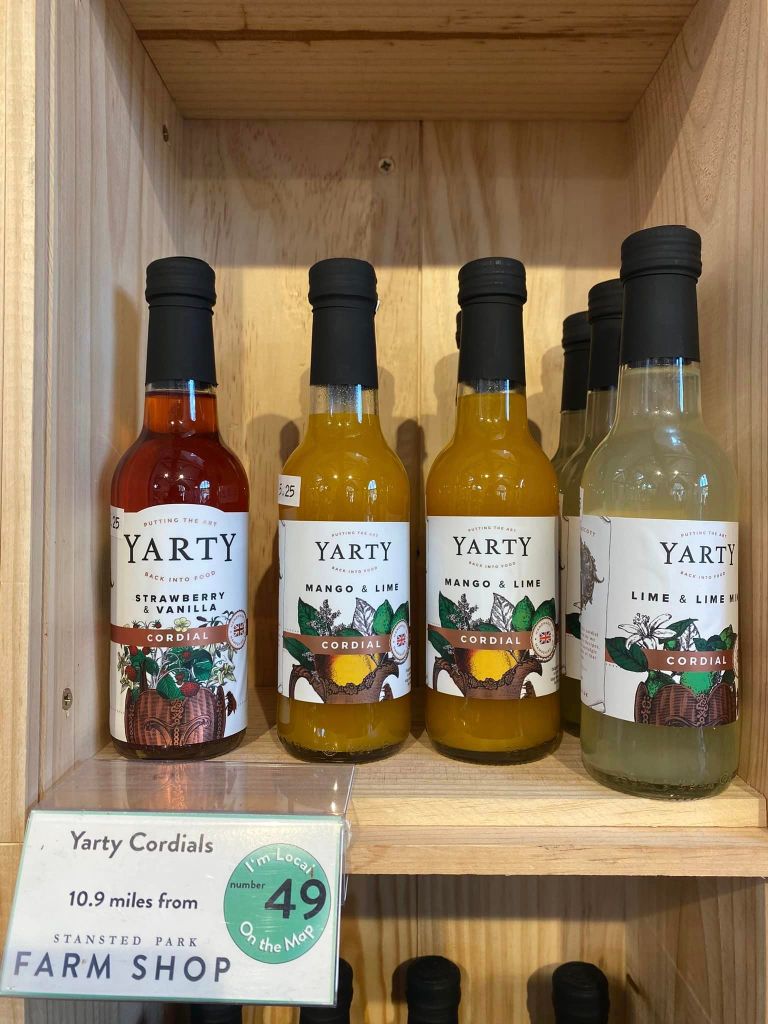
Yes, of course, the products are more expensive comparatively, but we can always buy less, inculcating a discipline of buying only what we need, instead of more, more, more, which is the cancer of modern society.
Project:
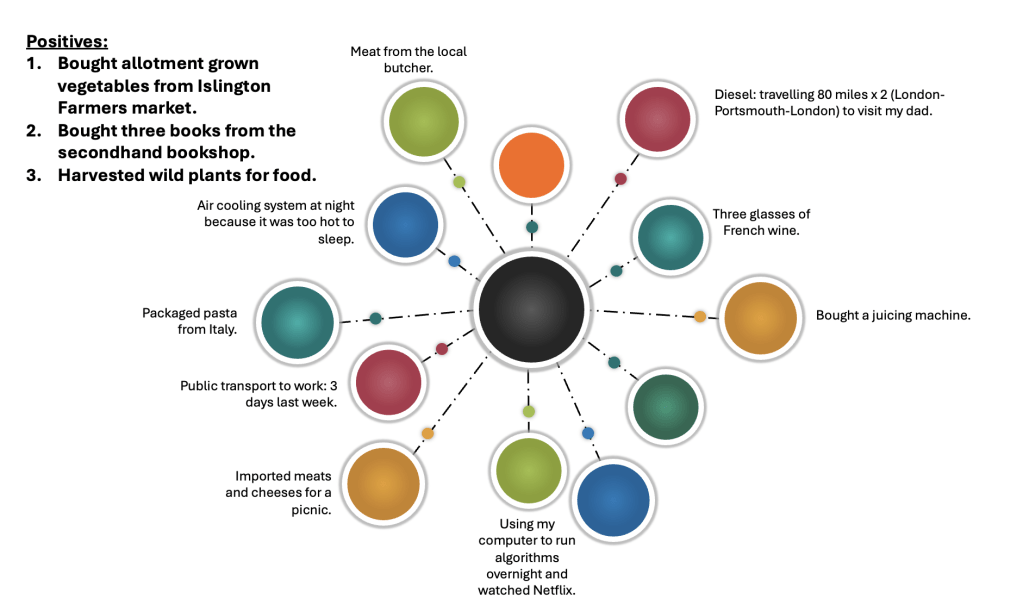
Use this template to map the carbon miles of your week’s activities and purchases. This is a good self-awareness exercise to understand your own carbon footprint. Here is mine for illustrative purposes:
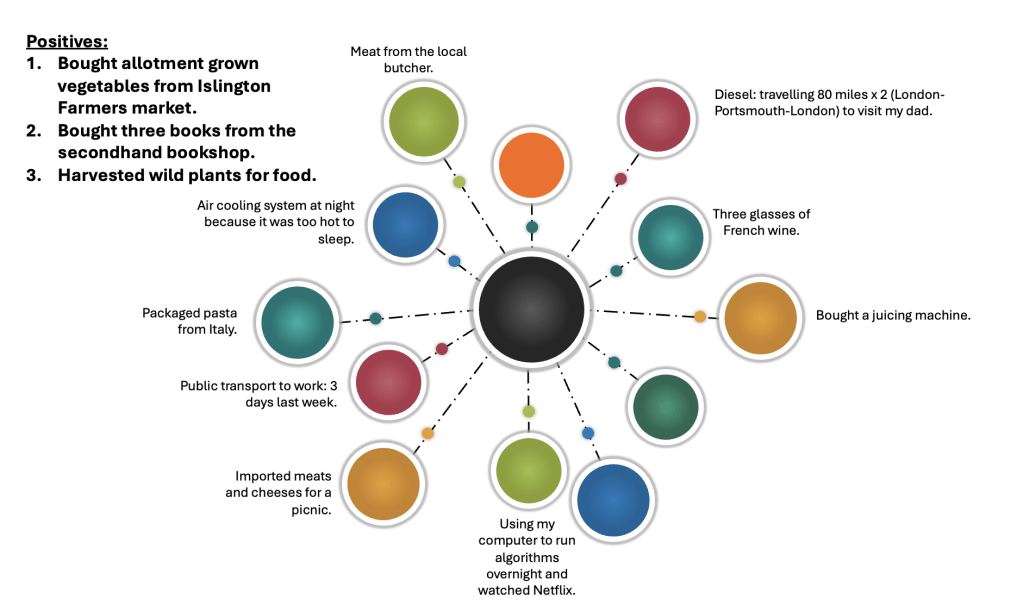
Schools could use this to map a more exact view of carbon miles for weekly food consumption. Here is the template for you to download and use.


 World Garden Schools
Leave a comment